1993
The first jobs
Jérémie began by maintaining his parents’ vehicles and fitting performance parts to his own car and those of his friends. Word spread at school, and the work became a small sideline focused on European cars, including Renault, Volkswagen and Audi.
1997
Engine swaps and the drag strip
One early project was fitting a Corrado VR6 engine into a 1987 Jetta. More requests followed, along with a VR6-powered 1991 Golf. With further mechanical changes and Mickey Thompson tyres, that Golf recorded 12.48 seconds at 113 mph at Napierville Dragway, according to Jérémie’s account. He also recalls coverage in GTI Mag and VW Performance.
Early 2000s
Show cars and VR6 turbo projects
The early 2000s included a modified Mk3 Jetta VR6 with mechanical, bodywork and interior changes, plus a 5.1 audio system. It appeared at shows and in Québec Tuning.
Turbocharging became a larger part of the work. Jérémie reports 472 whp and 453 lb-ft from one turbocharged Jetta using the original VR6 engine, with quarter-mile runs in the eleven-second range.
1991 Golf VR6 · Quarter-mile at Napierville113 mph · 1997
2003–2004
The 20th Anniversary GTI
A Golf GTI 20th Anniversary Edition became the next development car. Its original 1.8T reached a reported 351 whp and 290 lb-ft before Jérémie chose to change the engine build rather than keep increasing output on the original setup.
The car also received 358 mm brakes, 19-inch wheels, coilovers, chassis bracing and European R32 body and interior parts. It was shown in Canada and the United States.
For the later engine build, Hans Dahlback of Dahlback Racing supplied the mechanical valvetrain, and Tom Kolimatsis of TK Race Heads worked on the cylinder head. Jérémie’s account records 9,800 rpm, 690 whp and 570 lb-ft from that configuration.
Mid-2000s
The blue Golf R32
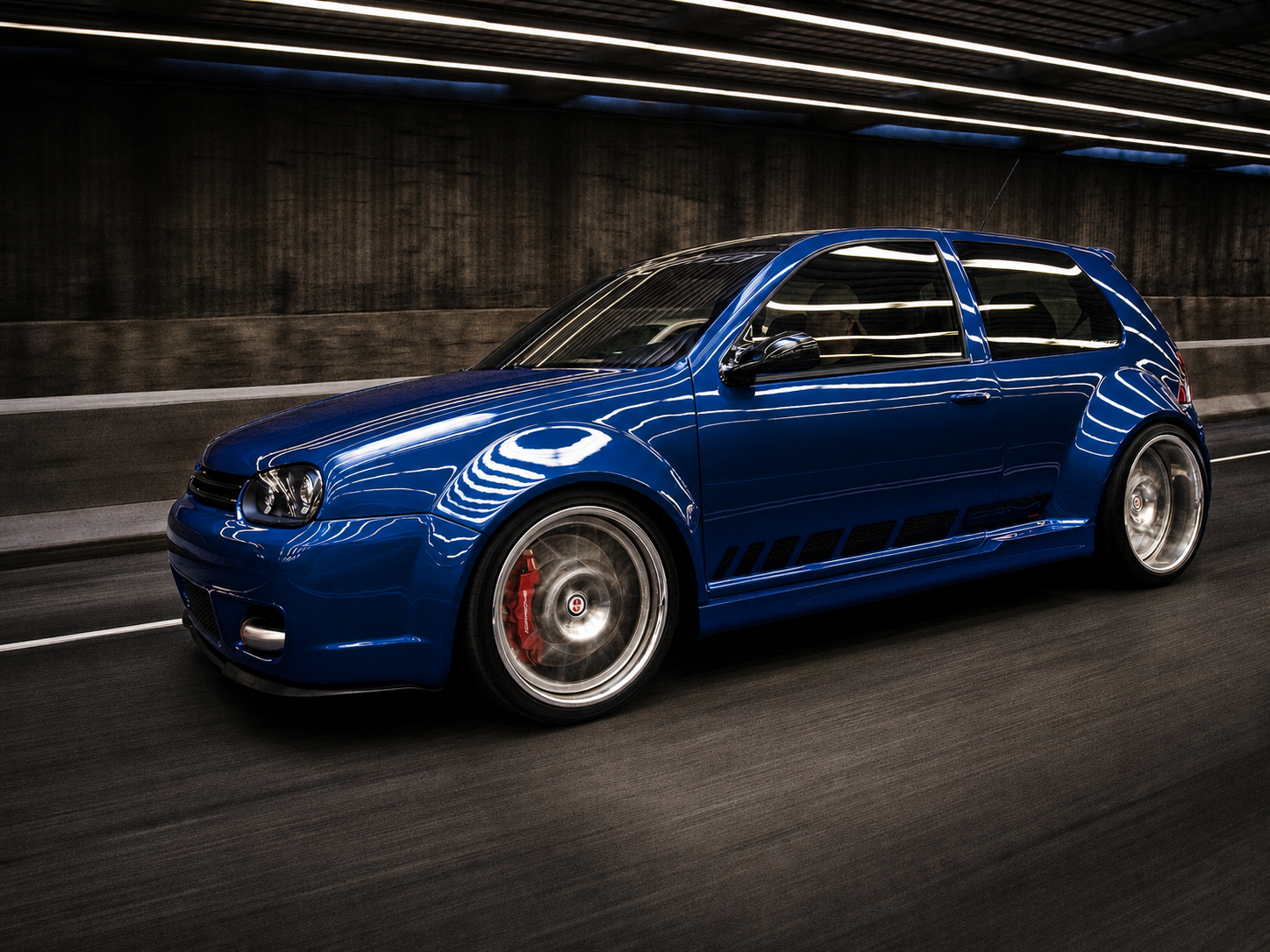
Jérémie imported two Mk4 Golf R32s from the United States: one for resale and one for development. The blue 2004 car received a rebuilt, turbocharged engine, suspension changes and widened bodywork. His biography describes a roughly 900 hp road-going configuration.
The changes included a 75 mm widening at the front and 150 mm at the rear, with 255/30R19 front tyres and 315/25R19 rear tyres. The project brought together engine, chassis and bodywork development in the same car.
2009
New platforms and customer cars
As Volkswagen and Audi introduced new engine families, the workshop’s projects expanded to EA888 four-cylinders, EA837 supercharged V6s and EA824 twin-turbo V8s. Jérémie’s history reports examples above 650 hp, 500 hp and 750 hp respectively. Those figures describe particular builds, not a promised result for every vehicle.
Maintenance and repair work on customer-owned Audi R8s and Lamborghini Gallardos also became part of the workshop’s activity.
2018–2019
R8 and Huracan turbo projects
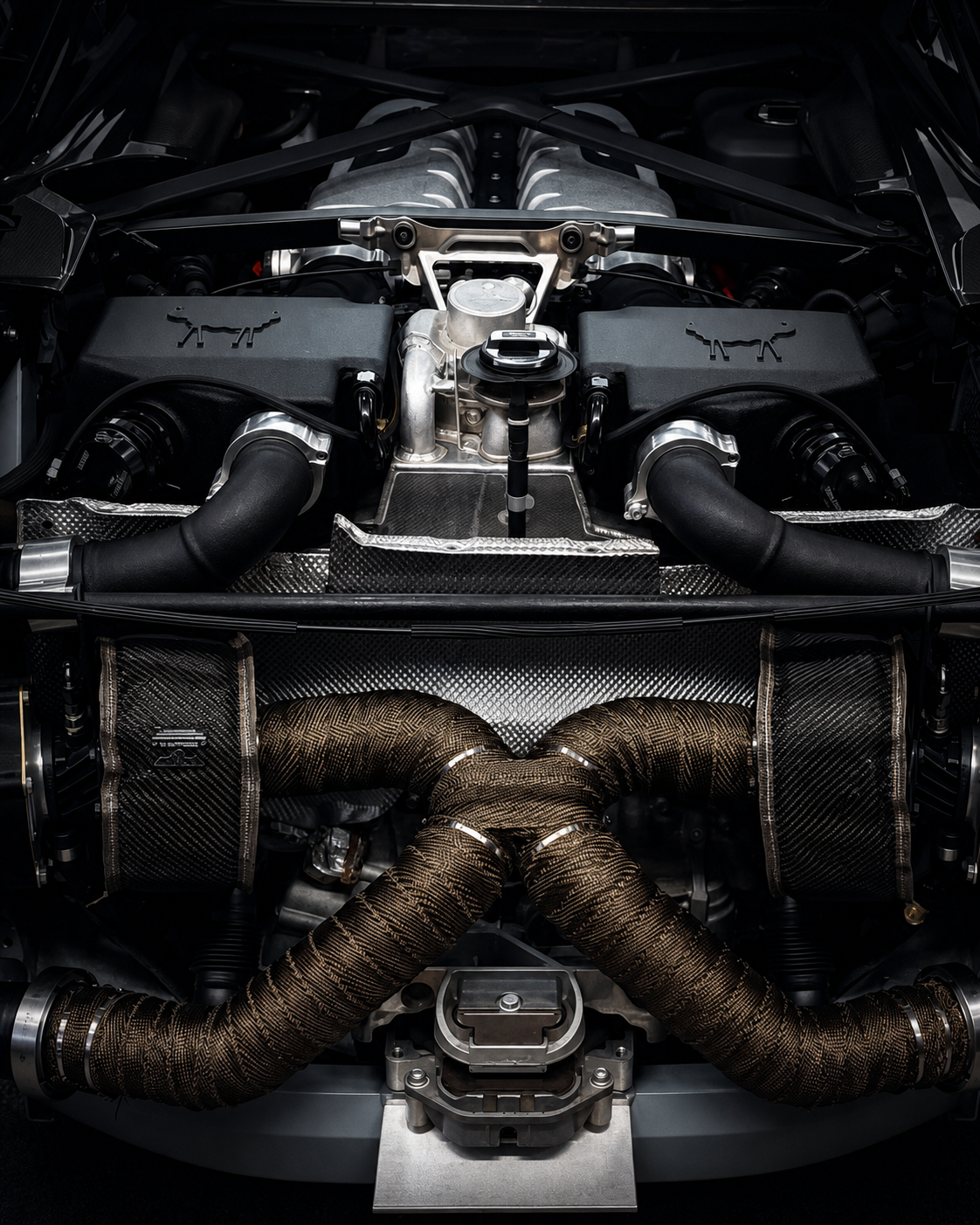
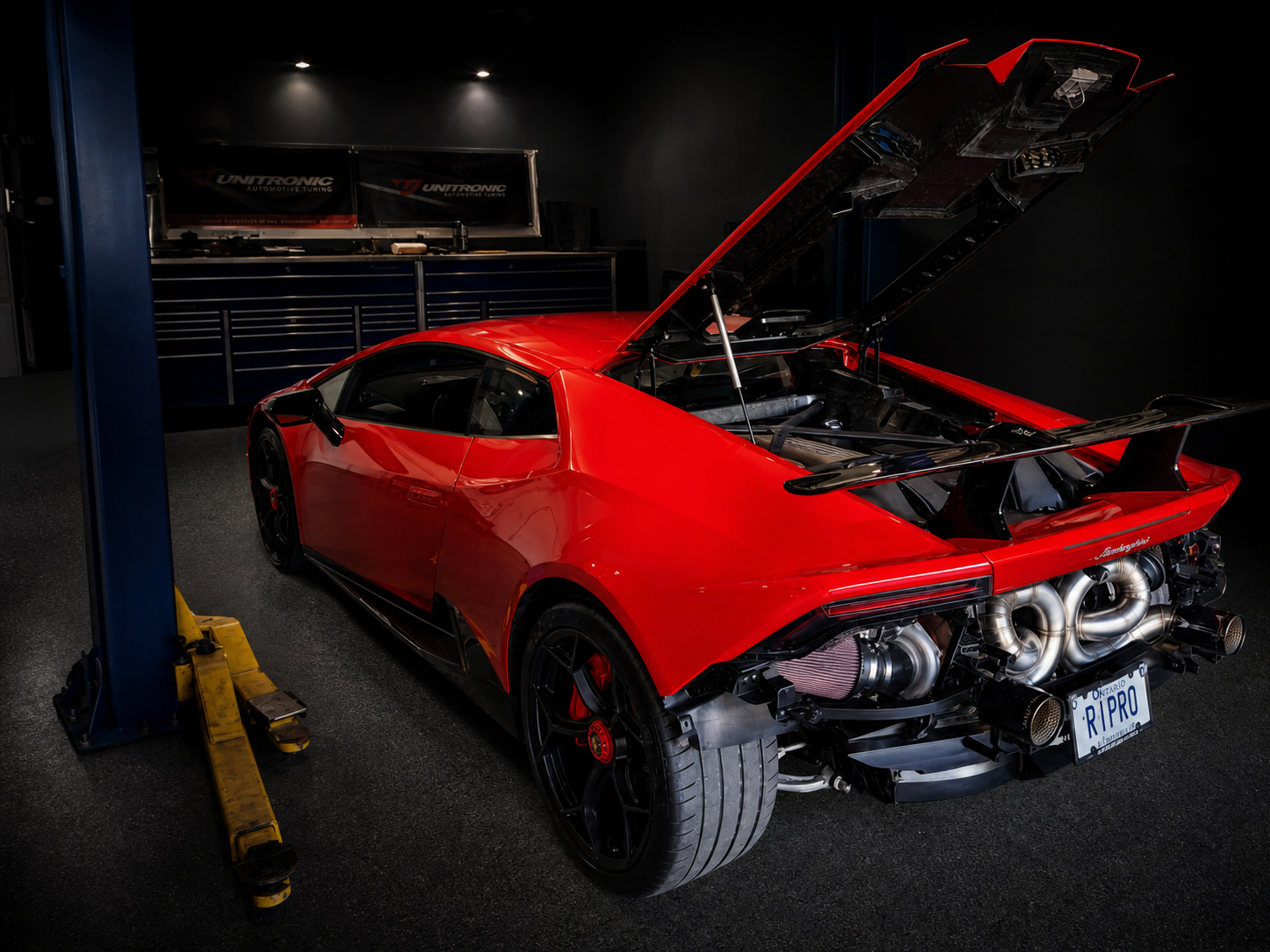
Customers began asking for road-going Audi R8 and Lamborghini Huracan builds above 1,000 hp. Several turbo kits were installed, with everyday drivability among the goals discussed for those projects.
This period also included a 283 km/h standing half-mile run and a quarter-mile result of 9.82 seconds at 143 mph.
Quarter-mile · 143 mph
Standing half-mile
2018–2019 · Results from Jérémie’s project history
2020 onward
Continuing the work
The EA825 twin-turbo V8 brought further work on vehicles such as the Urus, Bentayga, Cayenne Turbo and Audi RS6, RS7, S8, SQ7, SQ8 and RS Q8. Jérémie reports Stage 3 examples above 950 hp and 845 lb-ft. Alongside these larger projects, maintenance, diagnostics and repairs remain part of the workshop’s work.
History provided by Jérémie; published R32 figures are linked above.